What is a qubit physically (electron spin, superconducting, ion traps, photons)?
What is a qubit physically?
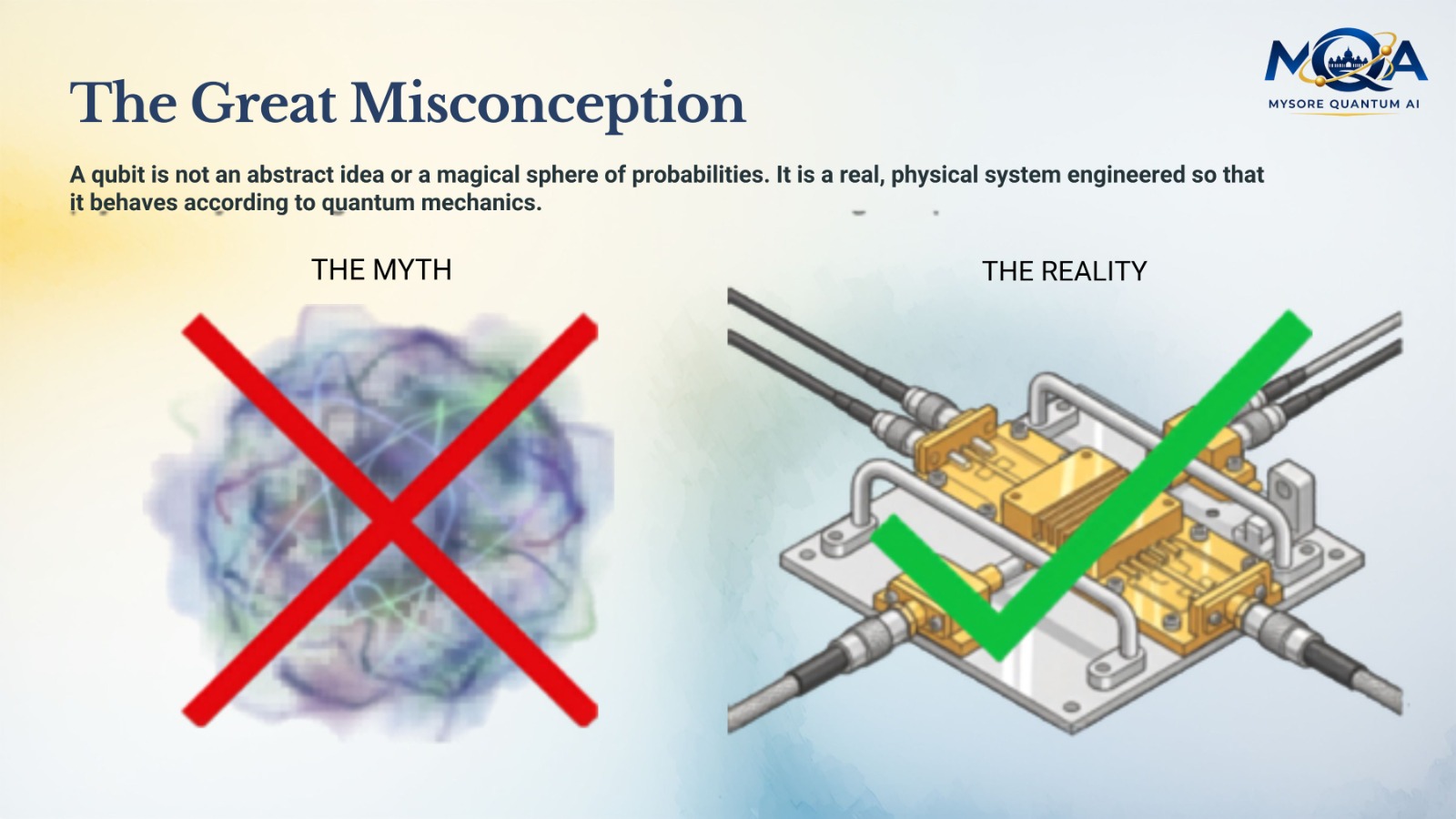
When we say “qubit,” it’s easy to imagine something abstract, like a magical sphere of probabilities. But a qubit is not an idea. It’s a real, physical system engineered so that it behaves according to quantum mechanics.
At its core, a qubit is:
Any physical system that has two distinguishable states and can exist in a controlled quantum superposition of those states.
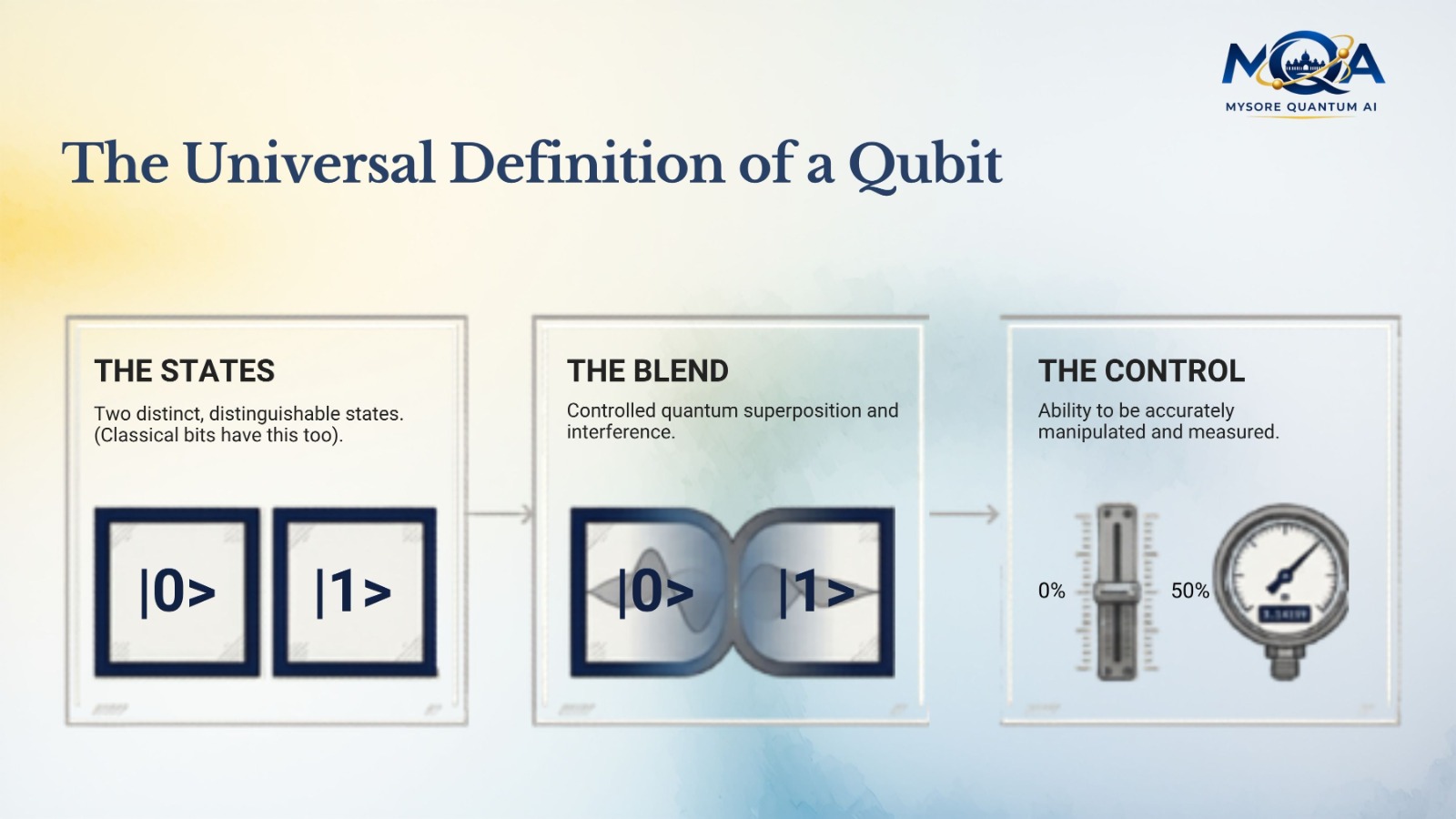
The key is not just having two states (classical bits have that too), but being able to control superposition, interference, and measurement.
Different technologies build qubits using very different physical systems. Let’s look at the four most important ones.
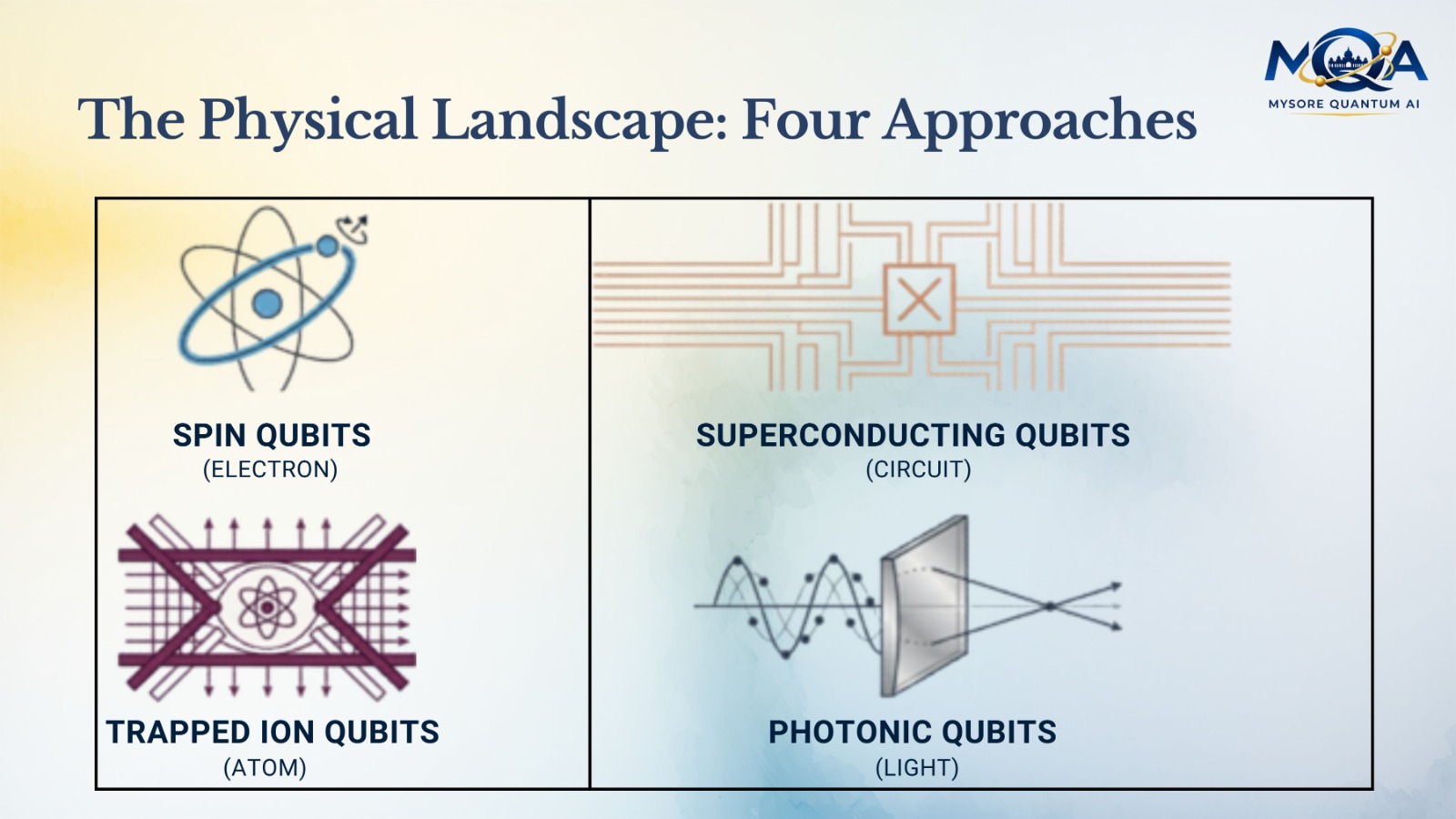
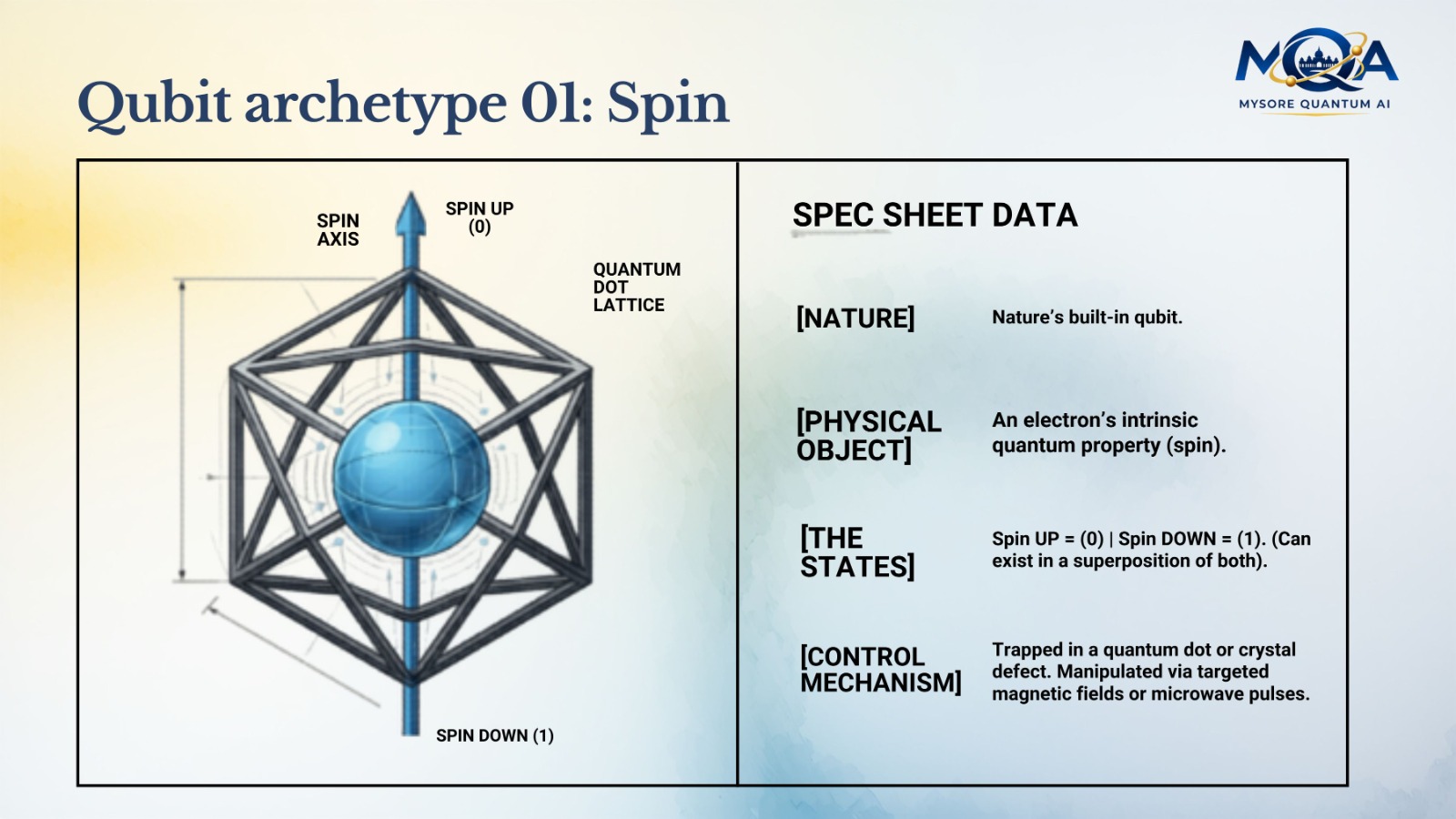
1. Spin Qubits – “Nature’s built-in qubit”
Used in research by: Intel, QuTech
What is it physically?
An electron’s spin – an intrinsic quantum property.
- Spin up considered as |0⟩
- Spin down considered as |1⟩
And crucially, it can also be in a superposition of both.
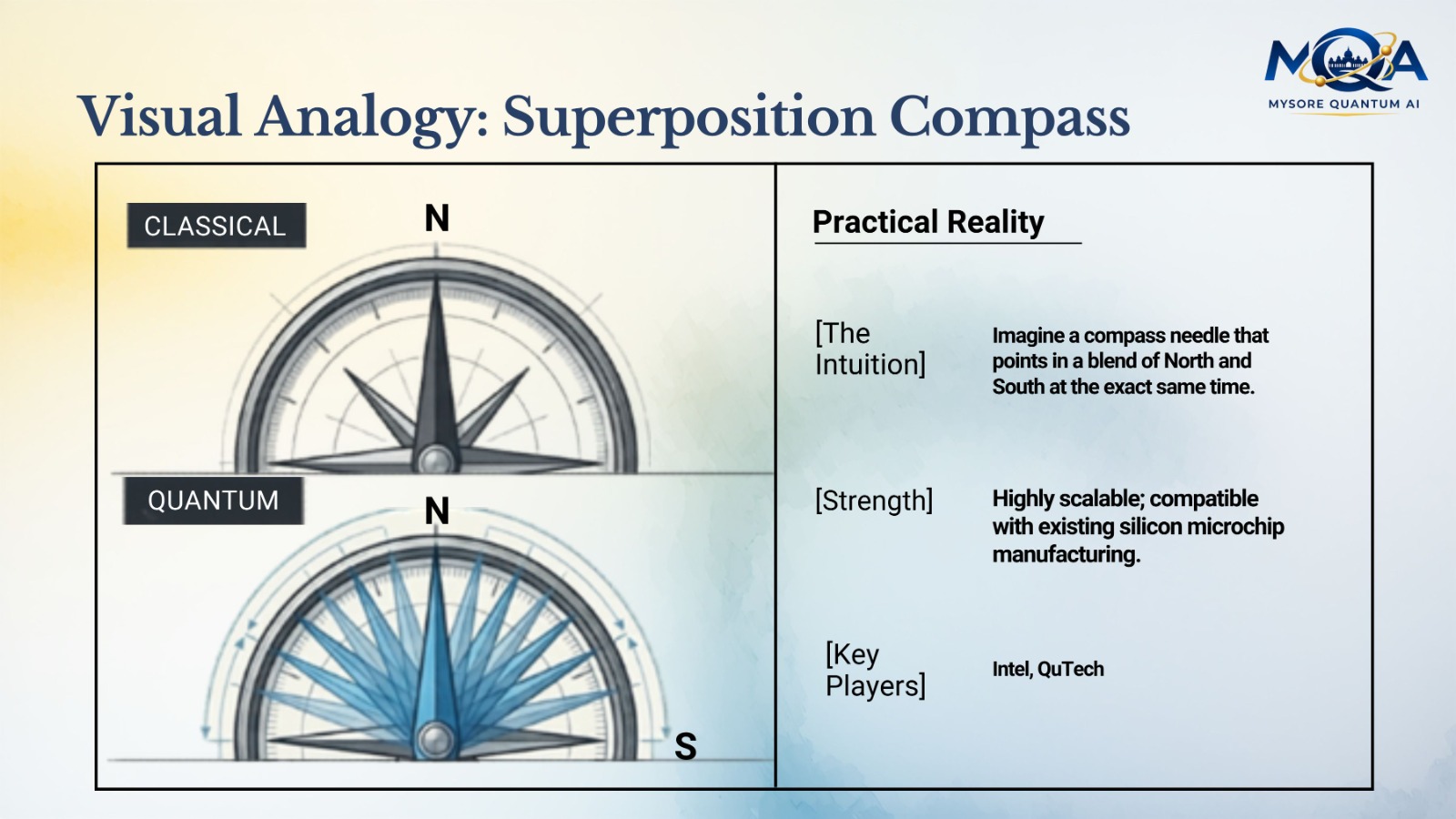
Intuition
Think of a compass needle:
- Classical: points north or south
- Quantum: can point in a blend of both at once
How do we control it?
- Trap a single electron in a quantum dot or crystal defect
- Use magnetic fields or microwave pulses to manipulate its state
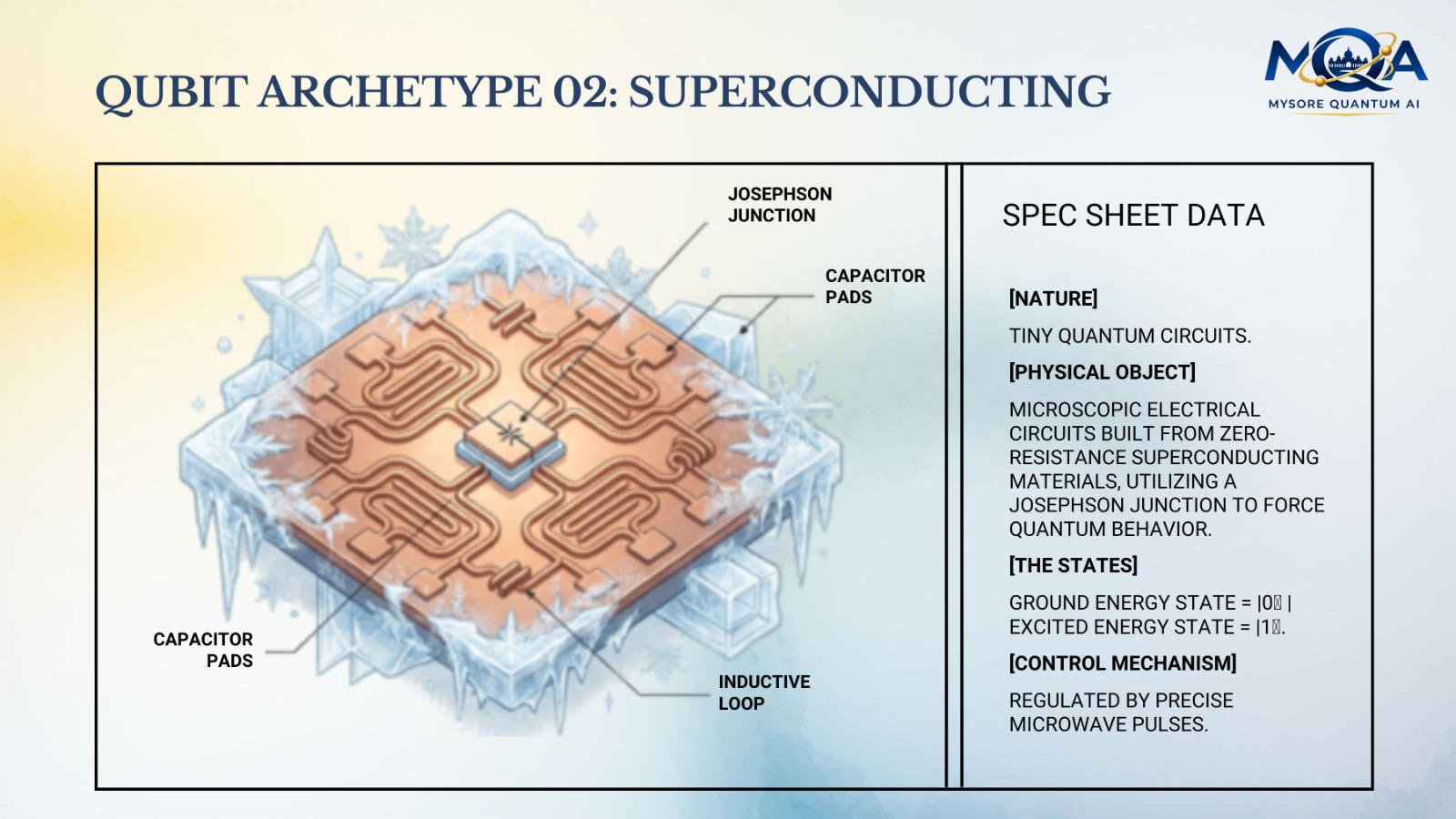
2. Superconducting Qubits – “Tiny quantum circuits”
Used by: IBM, Google
What are they physically?
These are microscopic electrical circuits made from superconducting materials (materials that conduct electricity with zero resistance at very low temperatures).
They include a special component called a Josephson junction, which introduces quantum behavior into the circuit.
How does it become a qubit?
- The circuit can support different energy states
- Ground state as |0⟩
- Excited state as |1⟩
- Because it’s quantum, it can also be in a superposition of both
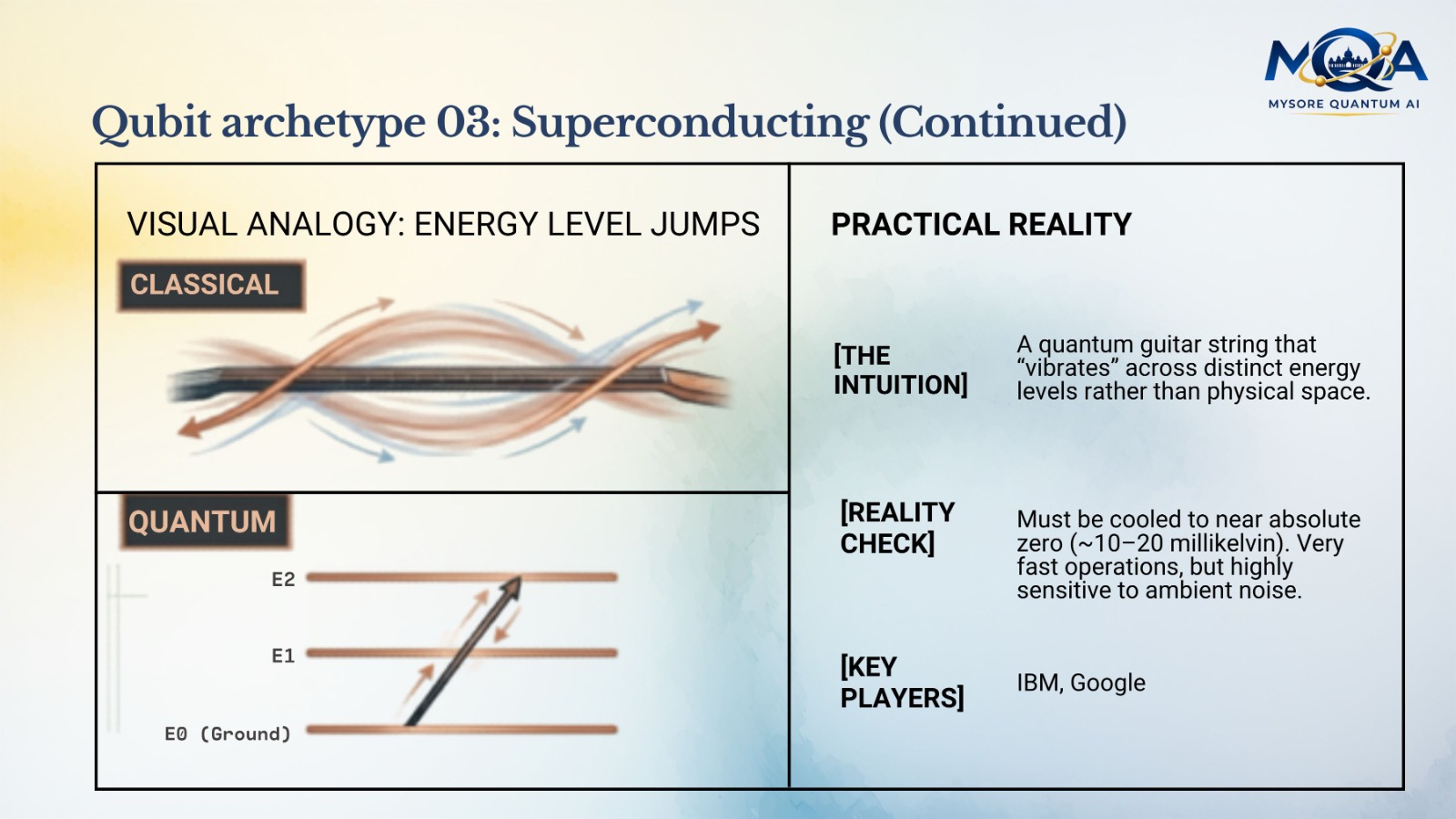
Intuition
Think of it like a quantum version of a guitar string, but instead of vibrating in space, it “vibrates” in energy levels.
Practical reality
- Must be cooled to near absolute zero (~10–20 millikelvin)
- Controlled using microwave pulses
- Very fast operations, but sensitive to noise
3. Trapped Ion Qubits – “Individual atoms in a cage”
Used by: IonQ, Honeywell Quantum Solutions
What are they physically?
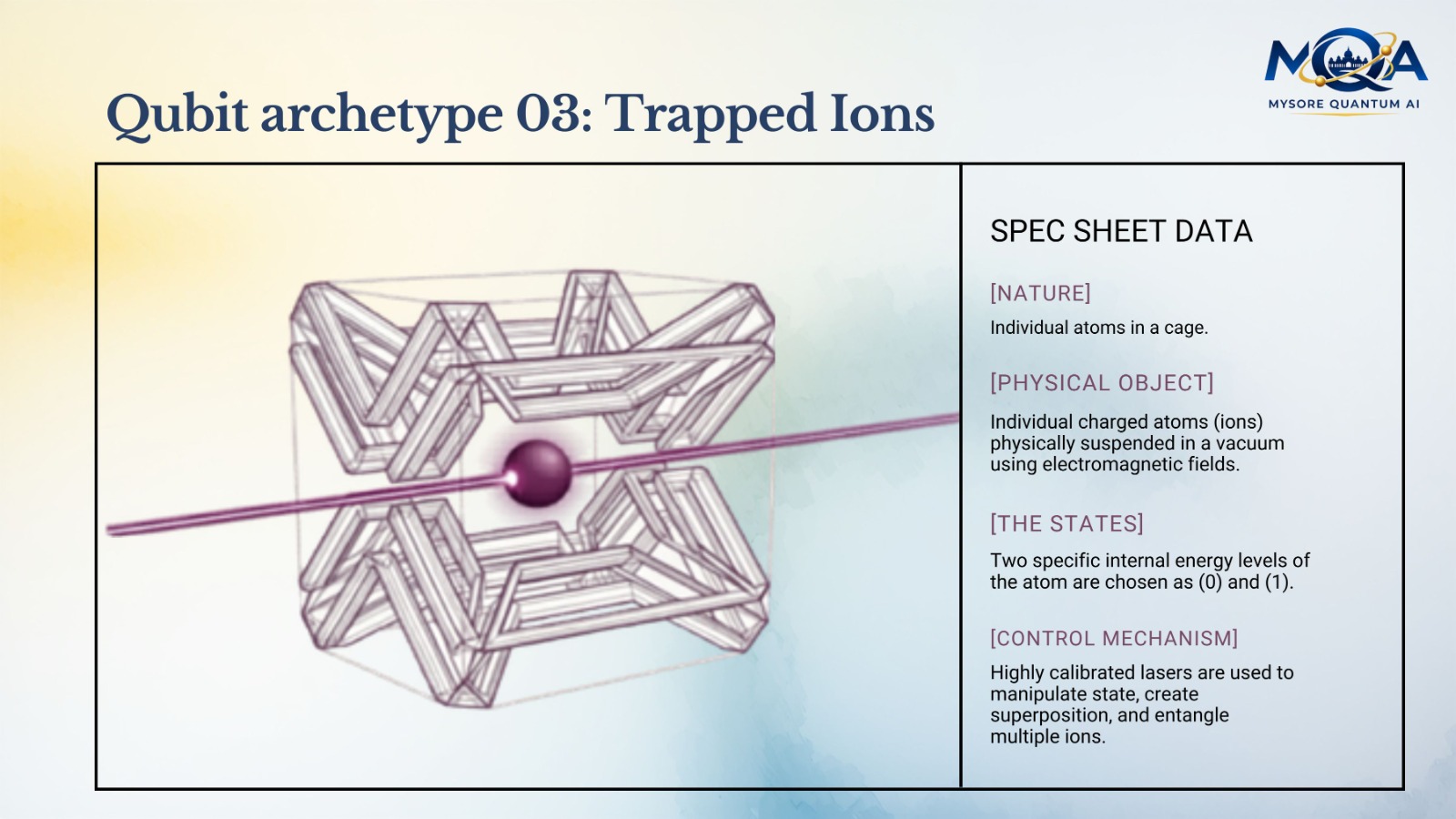
These qubits are individual charged atoms (ions) suspended in space using electromagnetic fields.
How does it become a qubit?
- Each ion has internal energy levels
- Two of these levels are chosen as:
- |0⟩ and |1⟩
- Lasers are used to:
- Manipulate the state
- Create superposition
- Entangle ions
Intuition
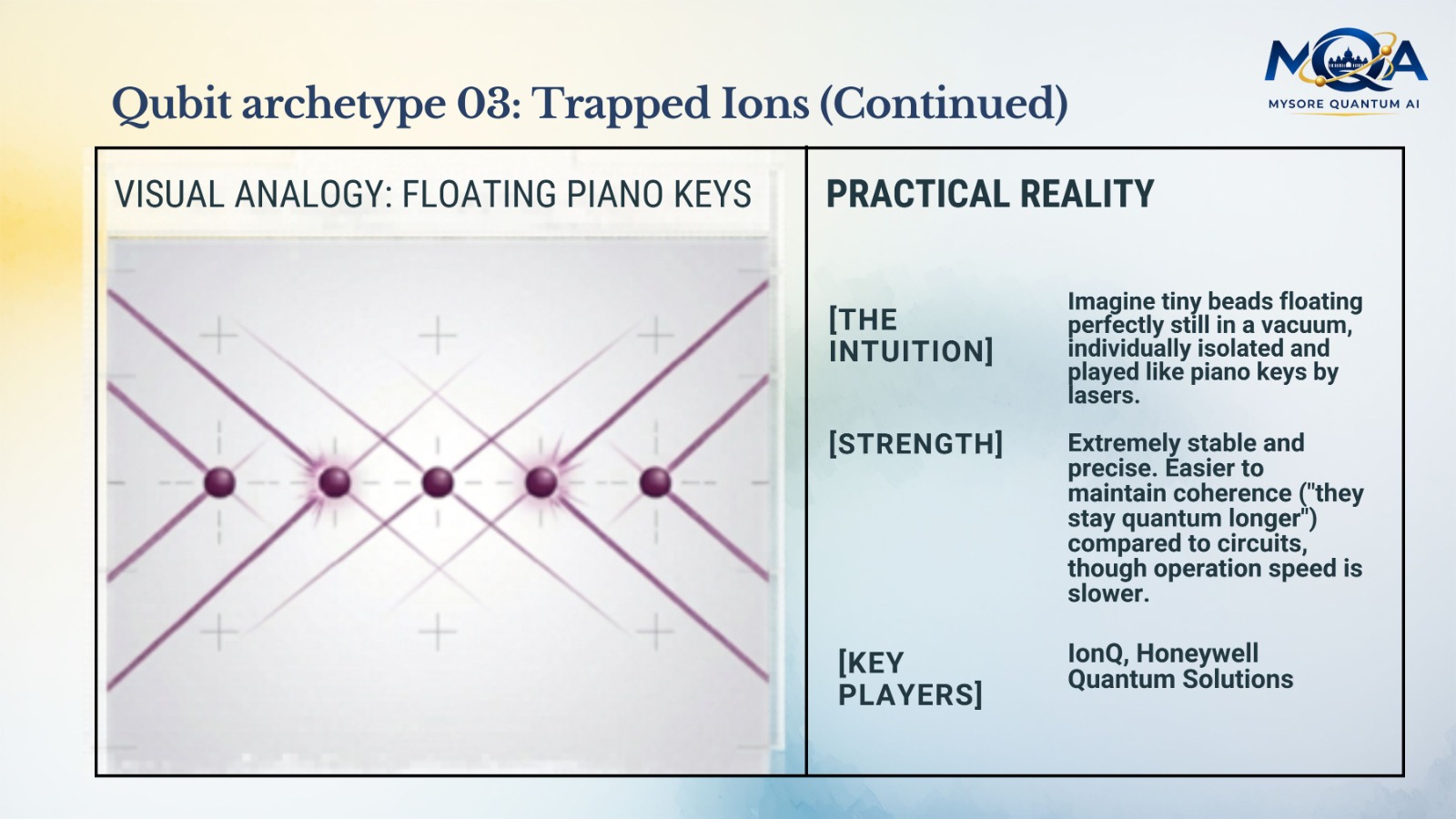
Imagine tiny glowing beads floating in a vacuum, each one perfectly isolated and controlled with lasers.
Practical reality
- Extremely stable and precise
- Slower operations than superconducting qubits
- Easier to maintain coherence (they “stay quantum” longer)
4. Photonic Qubits – “Particles of light”
Used by: Xanadu, PsiQuantum
What are they physically?
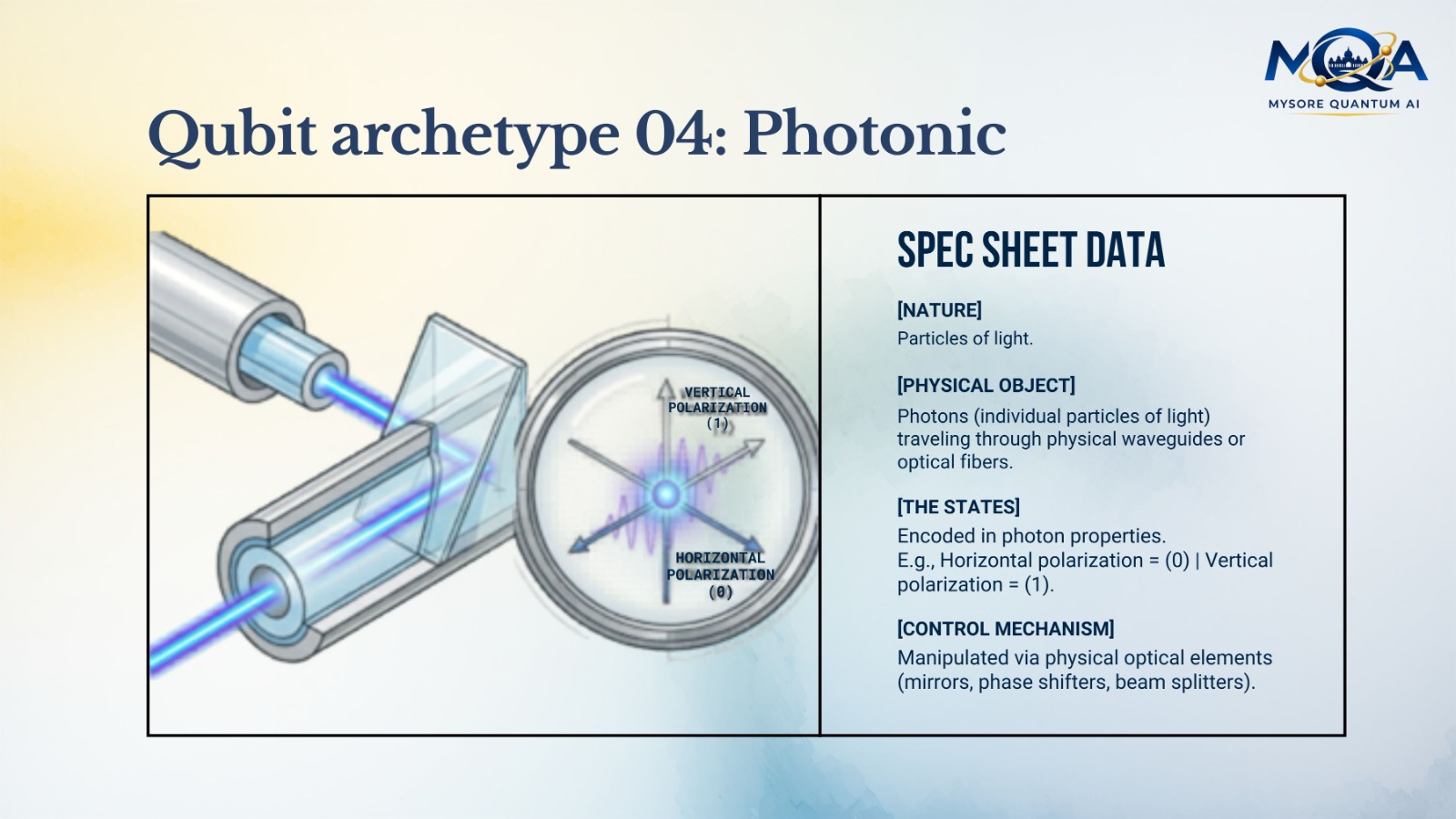
These qubits are photons (particles of light).
How does it become a qubit?
Information is encoded in properties of photons, such as:
- Polarization (horizontal vs vertical)
- Path (which fiber it travels through)
- Phase
For example:
- Horizontal polarization treated as |0⟩
- Vertical polarization treated as |1⟩
And photons can exist in superpositions of both polarizations.
Intuition
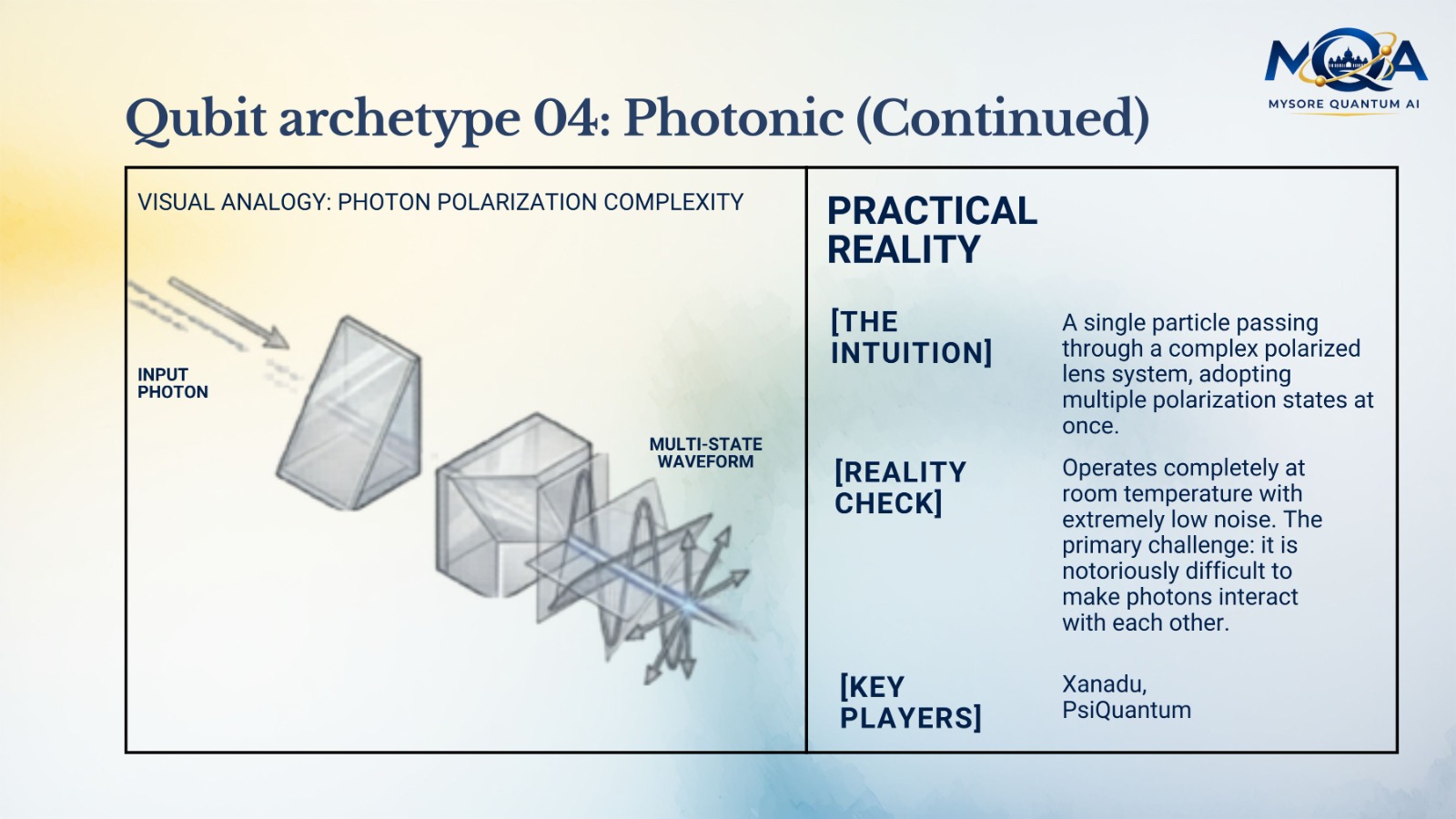
Think of a photon passing through a polarized lens system, where it can be in multiple polarization states at once.
Practical reality
- Operate at room temperature
- Very low noise
- Hard to make photons interact with each other (this is the big challenge)
Putting it all together
All these systems look completely different physically:
| Technology | Physical Object | Control Method | Strength |
| Spin (Electron) | Electron (spin state) | Magnetic fields / microwaves | Scalable (chip-compatible) |
| Superconducting | Electrical circuit | Microwave pulses | Fast |
| Ion traps | Individual atoms | Lasers | Precise |
| Photonic | Photons (light) | Optical elements | Low noise |
But they all satisfy the same quantum requirements:
- Two-level system, |0⟩ and |1⟩
- Ability to form superposition
- Ability to interfere
- Ability to be measured
The deeper insight
A qubit is not defined by what it is made of.
It is defined by how well we can control quantum behavior in a physical system.
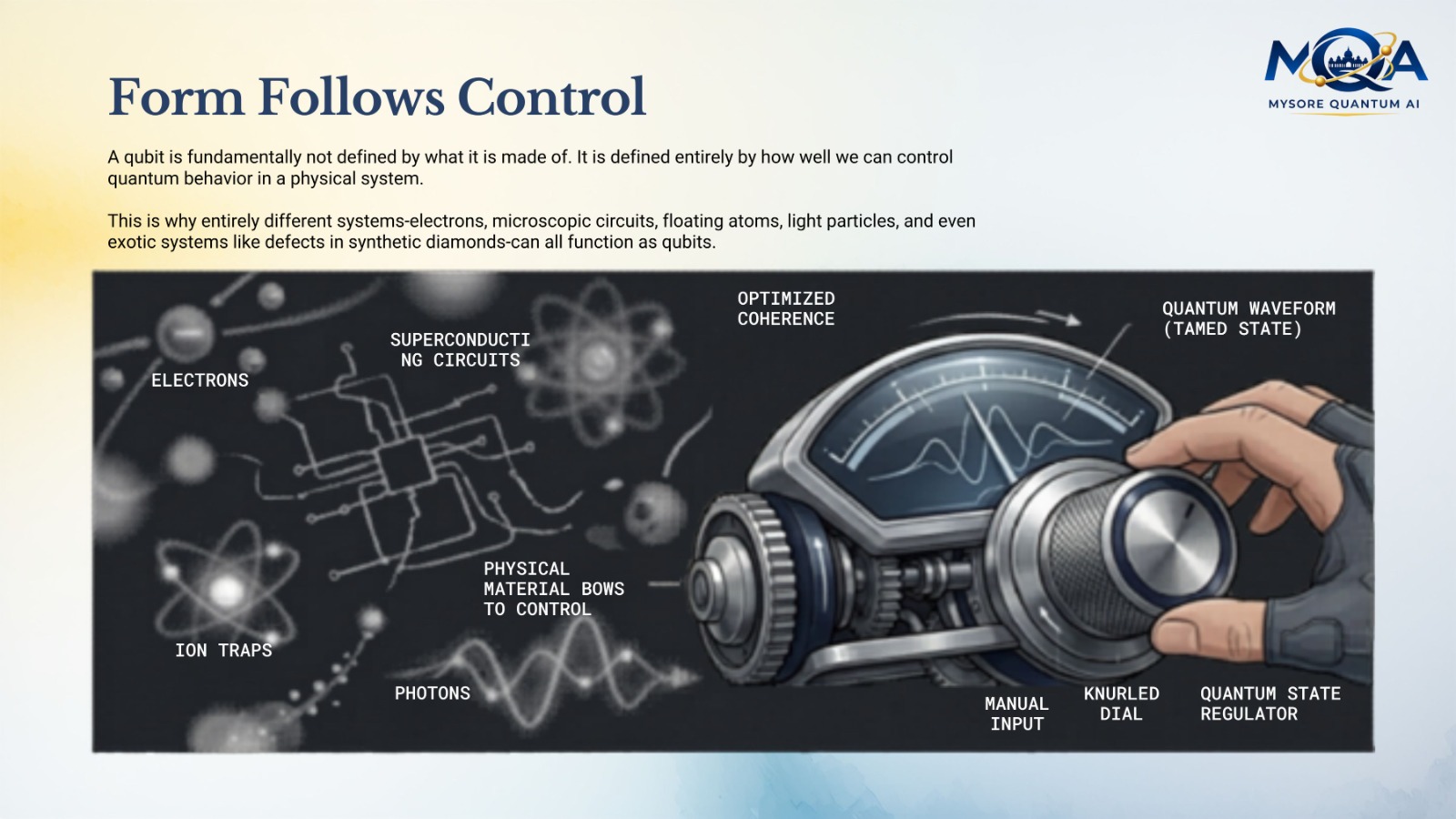
That’s why:
- A spinning electron be a qubit.
- A circuit can be a qubit
- An atom can be a qubit
- A photon can be a qubit
and in research labs, even more exotic systems (like spins in diamonds or topological states) are being explored.
One-line takeaway
A qubit is a carefully engineered physical system where nature’s quantum rules are not a bug – but the feature we compute with.