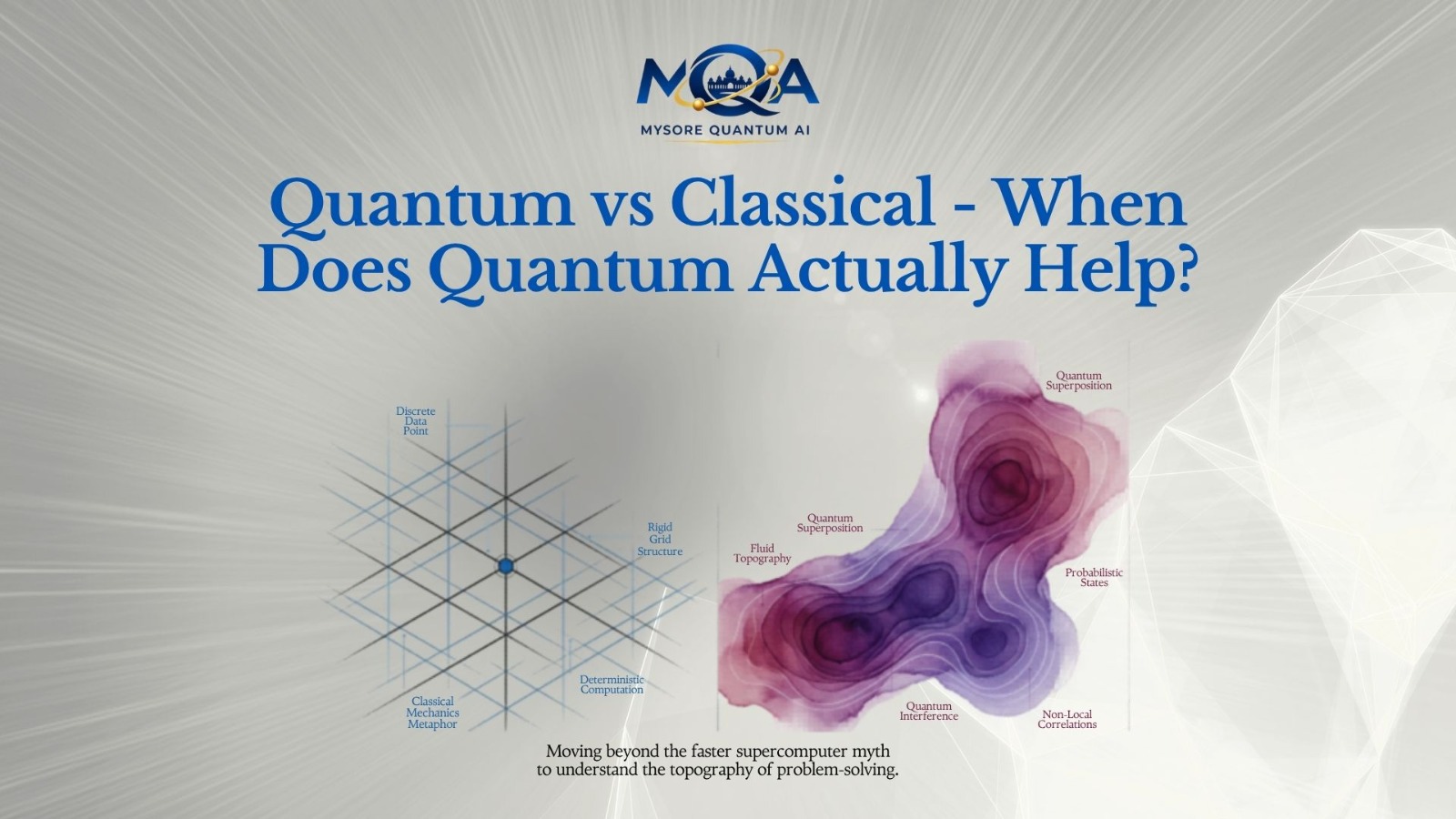
Quantum vs Classical – When Does Quantum Actually Help?
The Core Idea: Not Faster at Everything, Only at Certain Structures
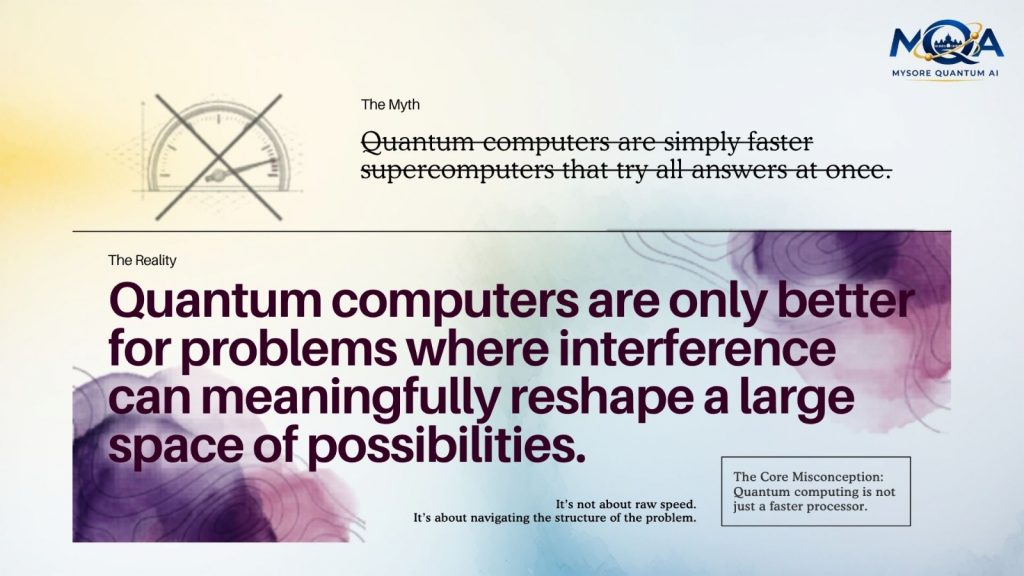
A common misconception is:
“Quantum computers are faster than classical computers.”
The reality is more precise:
Quantum computers are only better for problems where interference can meaningfully reshape a large space of possibilities.
How Classical Computers Work
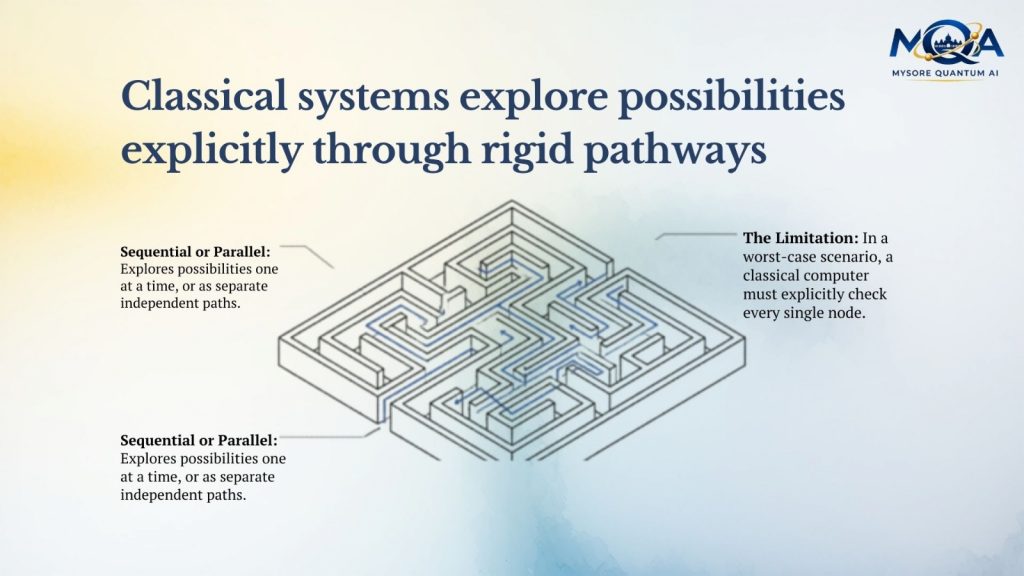
A classical computer:
- Explores possibilities one at a time (even if very fast)
- Or in parallel, but still as separate independent paths
Example:
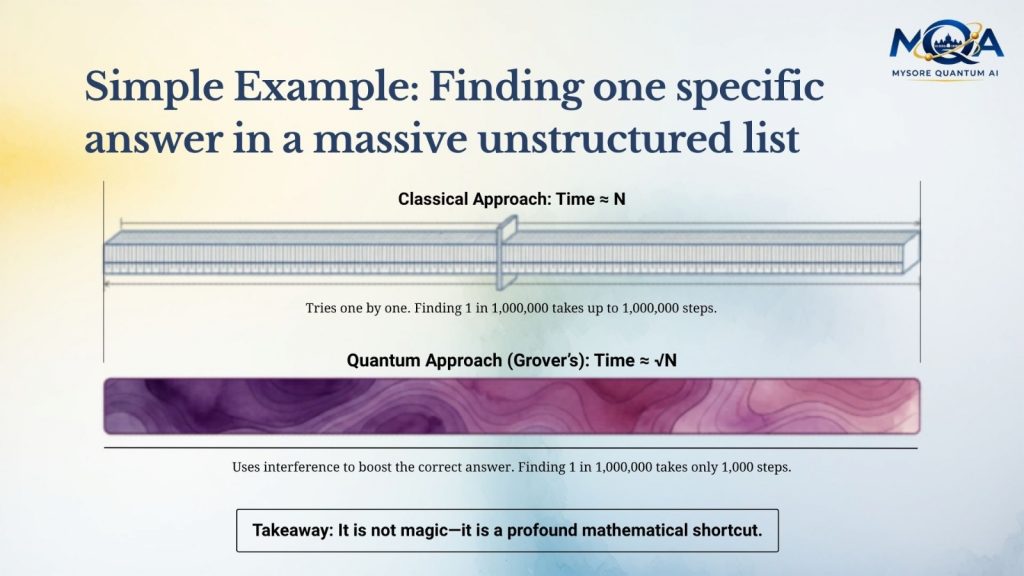
Searching a list of 1 million items:
- Worst case is to check all 1 million
How Quantum Computers Work
A quantum computer:
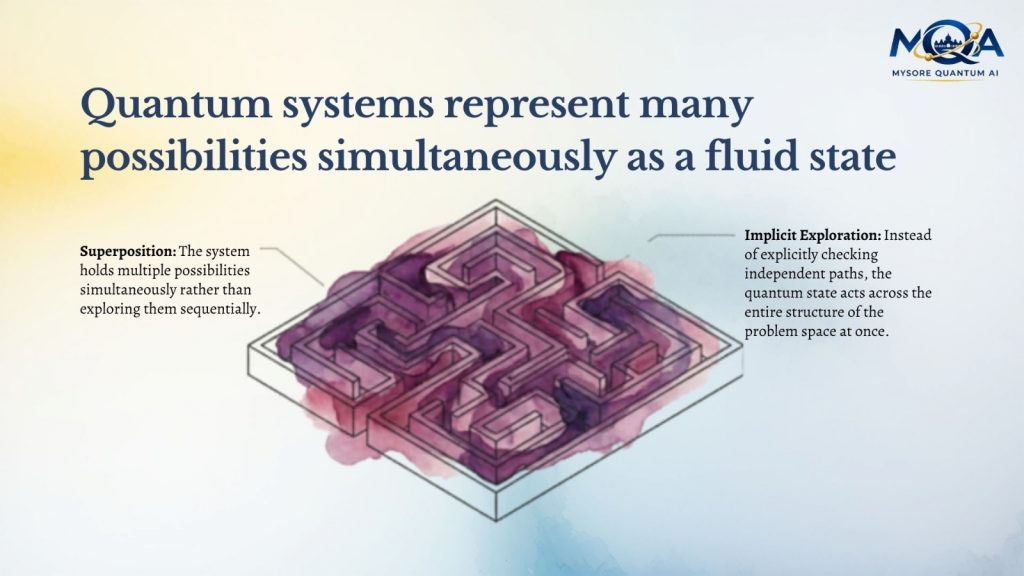
- Represents many possibilities at once (superposition)
- Uses interference to:
- Amplify correct answers
- Cancel incorrect ones
But here’s the catch:
You only get one answer at the end (measurement)
So the algorithm must ensure:
The correct answer becomes highly probable
When Quantum Helps (The Sweet Spot)
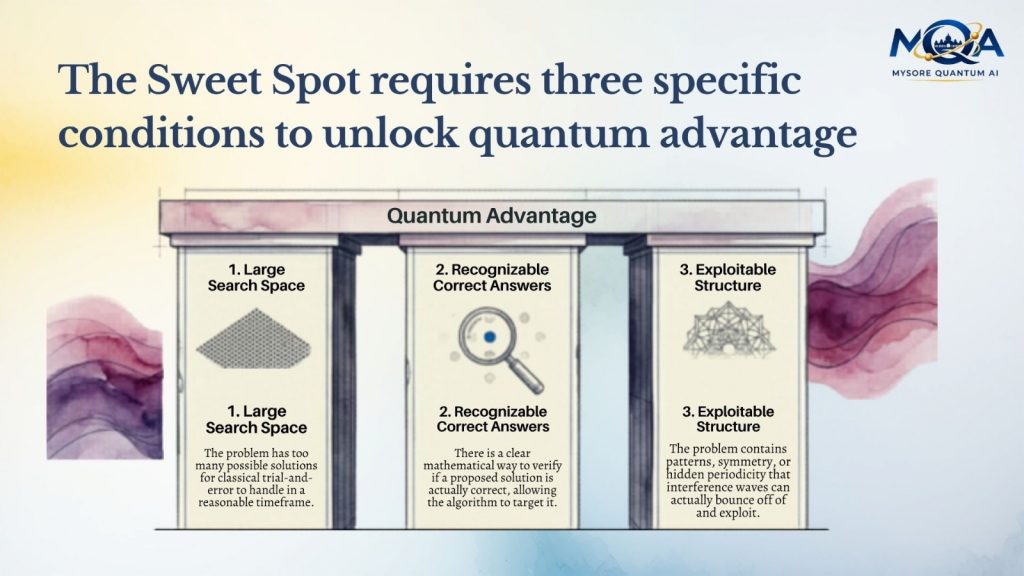
Quantum advantage appears when a problem has:
1. A large search space
- Many possible solutions
- Classical approach is slow and is trial and error
2. A way to recognize correct answers
- You can check if a solution is correct
- This enables interference to amplify it
3. Structure that interference can exploit
- Patterns, symmetry, periodicity, or hidden relationships
Simple Example: Searching
Imagine finding one correct answer in a huge space.
Classical approach:
- Try one by one
- Time ≈ N
Quantum approach (like Grover’s idea):
- Use interference to boost the correct answer
- Time ≈ √N
Not magic, but a real speedup
Where Quantum Really Shines
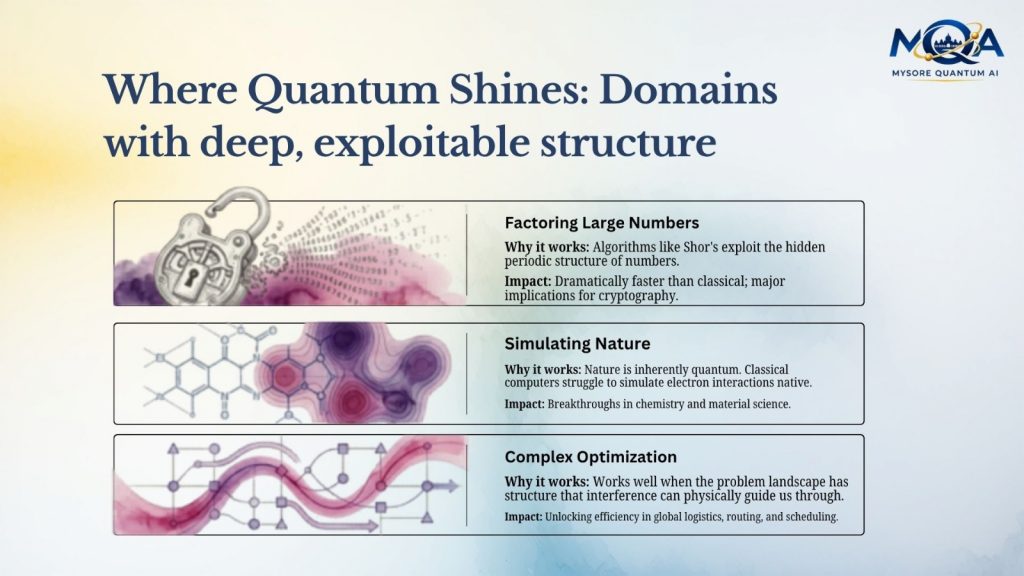
1. Factoring large numbers
- Important for cryptography
- Quantum algorithms (like Shor’s) exploit number structure
Classical: extremely slow
Quantum: dramatically faster
2. Simulating quantum systems
- Chemistry, materials, physics
Why?
Nature itself is quantum
A classical computer struggles to simulate:
- Molecules
- Electron interactions
But a quantum computer:
- naturally represents these states
3. Optimization (in some cases)
- Finding best configurations
- Logistics, routing, scheduling
Quantum helps when:
- The landscape has exploitable structure
- Interference can guide toward better solutions
Where Quantum Does NOT Help Much
This is equally important.
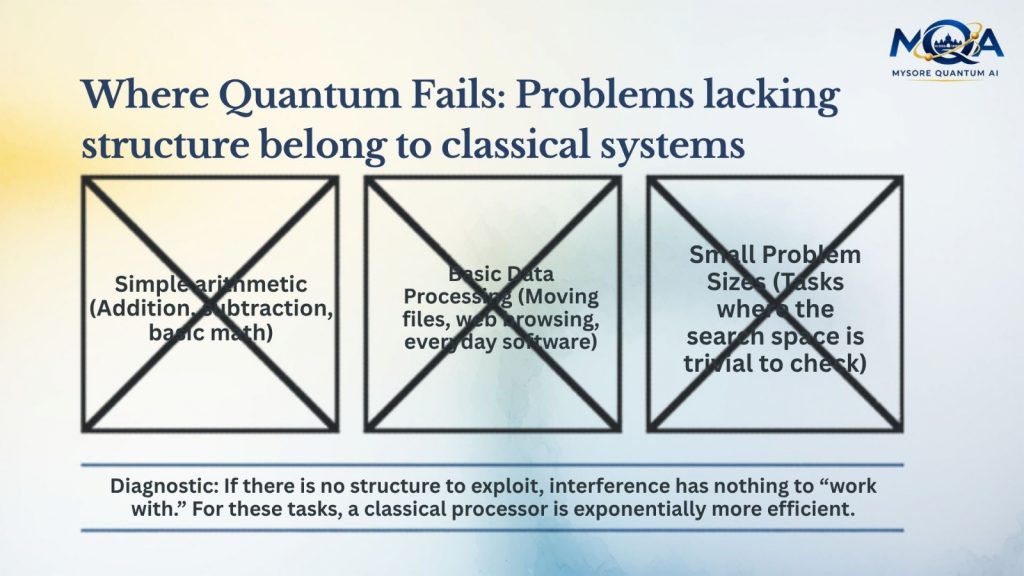
Quantum is NOT useful for:
- Simple arithmetic
- Basic data processing
- Most everyday software tasks
- Small problem sizes
Why?
If there’s no structure to exploit, interference has nothing to “work with.”
A Simple Mental Model: Maze vs Random Room
Classical computer:
- Walks through the maze step-by-step
Quantum computer:
- Explores many paths at once
- Uses interference to:
- Cancel dead ends
- Reinforce correct paths
Works great if:
- The maze has patterns
Doesn’t help if:
- It’s just a random room with no structure
Where People Get It Wrong
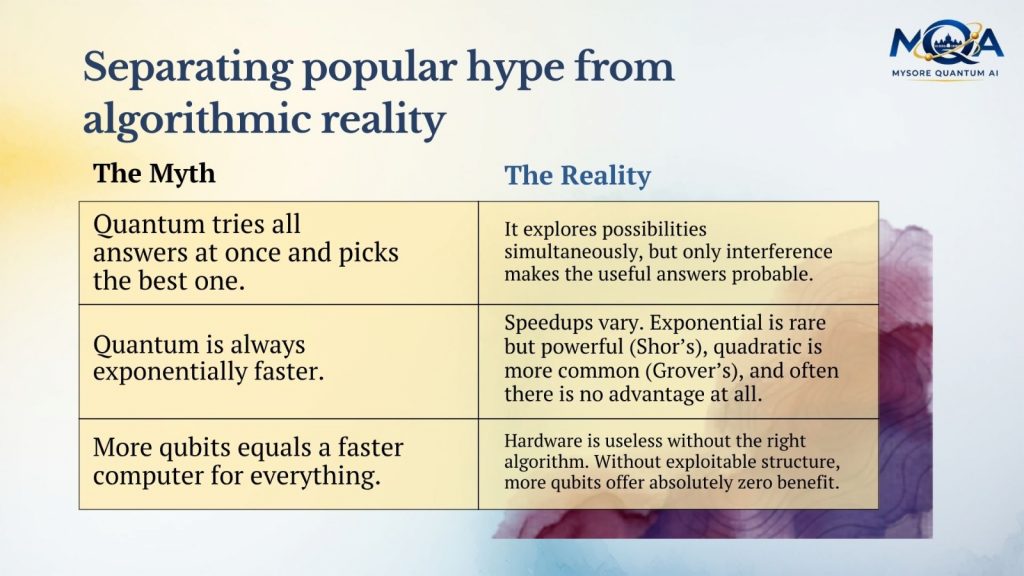
Myth 1: “Quantum tries all answers at once and gets the best one”
Reality:
It explores possibilities, but only interference makes useful answers likely.
Myth 2: “Quantum is always exponentially faster”
Reality:
- Sometimes exponential (rare but powerful)
- Sometimes quadratic (more common)
- Sometimes no advantage at all
Myth 3: “More qubits mean faster for everything”
Reality:
Without the right algorithm, more qubits don’t help.
The Role of Measurement (Connecting Back)
Just like in your earlier write-up:
- Superposition gives many possibilities
- Interference reshapes them
- Measurement gives one answer
So:
Quantum advantage exists only if interference has already concentrated probability on the correct answer before measurement.
The Subtle Trade-Off
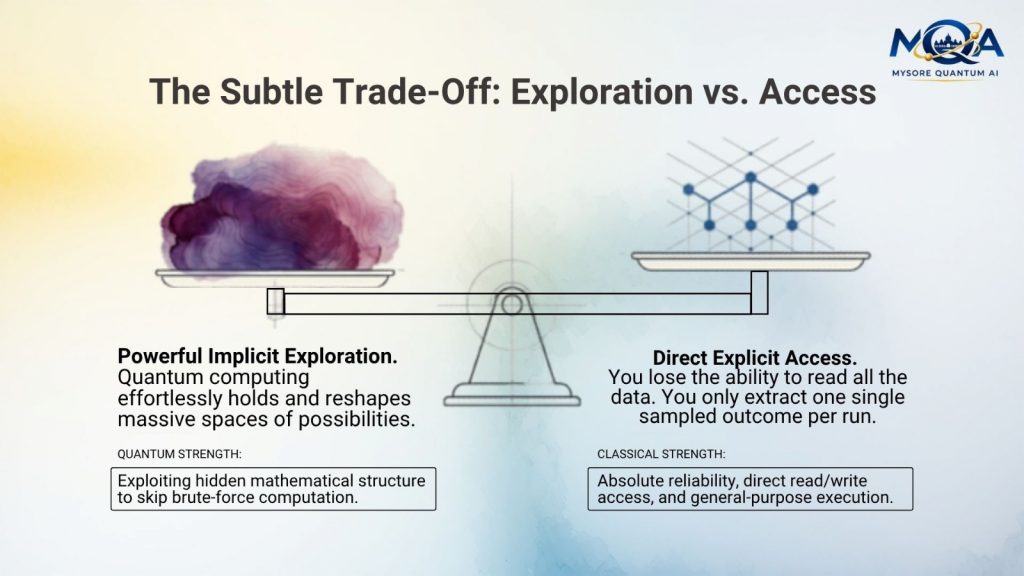
Quantum computing gives:
- Powerful exploration of possibilities
But takes away:
- Direct access to all of them
You only get:
One sampled outcome per run
Connecting the Big Picture
• Classical computing explores possibilities explicitly
• Quantum computing reshapes possibilities implicitly
• Classical strength reliability and generality
• Quantum strength exploits hidden structure
Bottom Line
Quantum computing is not a universal speed boost.
It helps only when a problem allows interference to guide many possibilities toward the right answer efficiently.
In short:
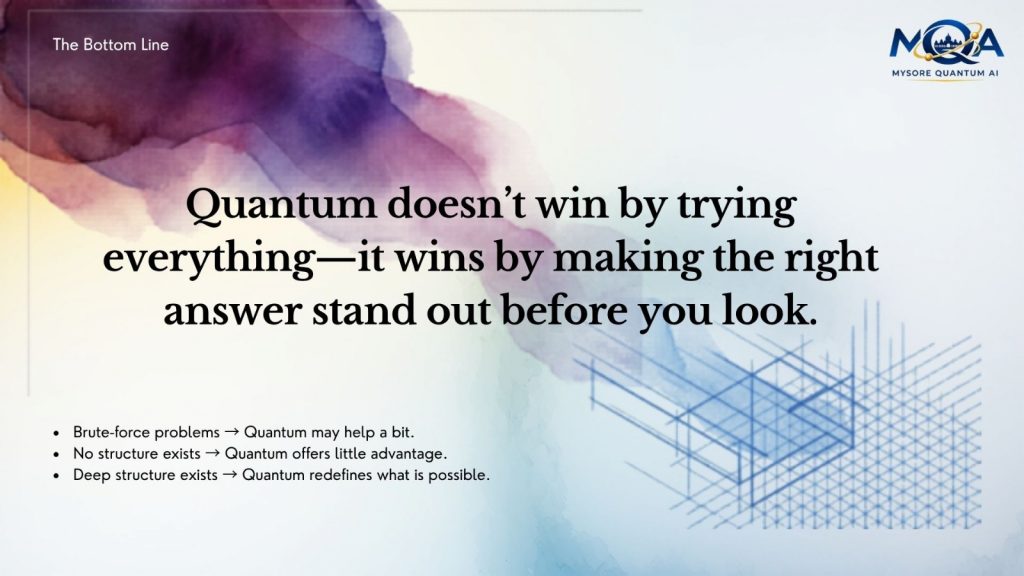
- If a problem is just brute-force quantum may help a bit
- If a problem has deep structure quantum can shine
- If no structure exists quantum offers little advantage
One-line takeaway
Quantum doesn’t win by trying everything – it wins by making the right answer stand out before you look.